
 24/7Emergency Service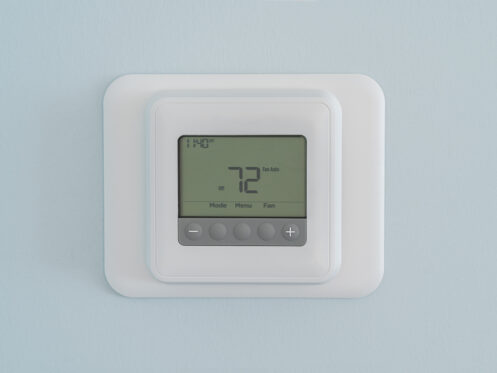
When you think about your HVAC system, you may not give much thought to one of its smallest components, the thermostat. However, that simple device plays a major role in your heating and cooling costs throughout the year. Since heating and cooling costs can account for nearly half of your total annual energy usage, even small thermostat adjustments can be worthwhile.
Why Do Thermostat Settings Matter?
Your HVAC system maintains a set temperature based on what your thermostat reads. Whenever your indoor temperature differs from the thermostat setting, your HVAC system turns on to make up the difference. For example, if it is winter and your thermostat is set to 70 degrees, your heating system will turn on when the indoor temperature drops below that setting.
Small changes can make a big difference over time. For instance, lowering your thermostat setting from 70 degrees to 67 degrees reduces the amount of heat your system must produce. Over weeks and months, that reduced runtime can result in noticeable energy savings.
Understanding Delta T
How hard your heating or cooling system works depends largely on outdoor temperature. Even in a well-insulated home, outdoor conditions still influence indoor comfort. Delta T is the difference between your indoor temperature and the outdoor temperature.
The larger the Delta T, the more energy your HVAC system needs to maintain comfort. For example, if it is 40 degrees outside and you want your home at 70 degrees, the Delta T is 30. If the outdoor temperature drops to 30 degrees, the Delta T becomes 40. A Delta T of 40 requires more energy than a Delta T of 30.
Using Setbacks
One of the most effective ways to reduce energy consumption is using temperature setbacks. A setback means adjusting the thermostat before you go to sleep or leave home. In winter, it is often recommended to lower the thermostat by 7 to 10 degrees during these times.
This reduces your system runtime and helps lower energy bills. Setbacks can also be used in the summer to reduce cooling costs. Smart and programmable thermostats make this easier because they can automate temperature changes based on a schedule.
Choosing the Right Thermostat
There are three main thermostat types: manual, programmable, and smart.
Manual thermostats require you to adjust settings yourself. Programmable thermostats allow you to schedule daily or weekly temperature changes, offering more automation when set up correctly.
Smart thermostats provide the most advanced features. They can automatically adjust temperatures, learn your habits over time, and offer remote control through a smartphone app. Many also provide real-time energy insights, allowing you to see how temperature changes affect usage. Smart thermostats can provide estimated energy savings of about 8 to 15 percent per year when used correctly.
Considering Zone Controls
Many homes can benefit from zone control systems. Zoning divides your home into separate temperature zones, each with its own thermostat. This works especially well for large homes and two-story homes where temperature differences between floors can be significant.
For example, warm air naturally rises, so the second floor often stays warmer than the first floor. A zoning system allows you to control temperatures separately upstairs and downstairs. Instead of heating or cooling the entire home equally, zoning lets you focus energy where it is needed, which can lower energy costs.
Avoiding Common Thermostat Mistakes
Thermostats can help reduce energy bills, but incorrect use can increase costs. One common mistake is setting extreme temperatures. Turning the thermostat from 68 degrees to 75 degrees does not heat your home faster. It simply forces your system to run longer and may cause you to overshoot your comfort level.
Another mistake is constantly adjusting the thermostat. Frequent changes make your HVAC system cycle more often, which increases wear and energy usage. More consistent temperature settings reduce strain and improve efficiency.
Thermostat placement also matters. Avoid installing it in direct sunlight or near heat-producing appliances. These factors can cause false readings and trigger unnecessary system operation. Also, avoid blocking the thermostat with furniture or décor.
Routine maintenance is essential as well. Thermostat calibration is often part of an annual HVAC tune-up to ensure accurate readings and reliable performance.
Achieving Optimal Temperature Settings
The best thermostat settings depend on your comfort preferences, but there are general guidelines that balance comfort and efficiency.
During winter, aim for 65 to 68 degrees when you are home. When sleeping or away, lower the temperature to 60 to 62 degrees.
During summer, aim for 78 to 80 degrees when you are home. When you are away, raise the thermostat to 82 to 85 degrees. These settings help reduce energy usage while keeping your home reasonably comfortable.
Rely on Our Thermostat Installation Service
A/C Plus Heating & Cooling provides reliable thermostat installation services for Murfreesboro, TN and surrounding areas. We can also help with thermostat repairs and troubleshooting.
Call A/C Plus Heating & Cooling today to schedule an appointment with one of our skilled HVAC technicians.